
Public spaces are designed for everyone. But are they designed with everyone in mind?
For some people, the noise, movement, crowds and sensory demands of places like shopping centres, airports, schools and community spaces can make them difficult to navigate. For others, simply having somewhere to pause, regulate or reconnect can make the difference between feeling able to participate and needing to leave.
That is where Social-Ability’s new Interactive Light Therapy Pod comes in.
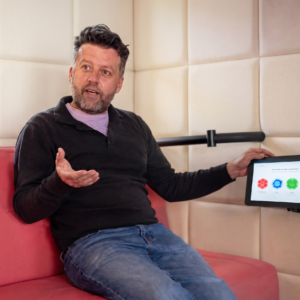
Chris: We’ve spent years seeing what interactive light therapy can do in care settings, hospitals and community environments. What’s exciting about the pod is taking that expertise beyond those traditional settings.
John: Exactly. The need for sensory support doesn’t begin with a diagnosis, and it doesn’t belong in one particular type of building. Anyone can need a moment. The question is whether public spaces are prepared to provide one.
The pod uses interactive light projection to create an accessible space where people can pause, explore, play or simply take a moment. It is designed to be wheelchair accessible and suitable for a wide range of needs and abilities, without requiring someone to explain or justify why they are using it.
Chris: There’s a social argument for this, but there’s an economic one too. If a public space is easier to navigate and more welcoming for more people, that can affect whether people visit, stay, participate and return.
John: And inclusion shouldn’t be an afterthought. We’ve built Social-Ability around the principle that technology should support meaningful human connection and participation. We bring years of experience in designing interactive experiences for people living with dementia, people with learning disabilities and autism, people in rehabilitation, people with complex needs, and many others.
The Interactive Light Therapy Pod brings that knowledge into a new environment.
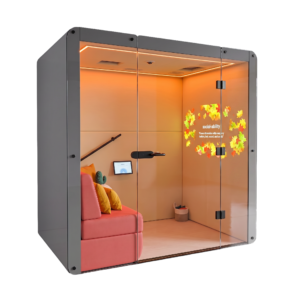
It is not simply a projector in a room. It is an extension of what we have learned through thousands of settings and countless interactions: that thoughtfully designed sensory experiences can create opportunities for connection, engagement and participation.
Chris: Ultimately, it’s about making sensory support available wherever people need it.
John: And making public spaces feel like they really are for everyone.
To find out more, book a meeting with us below:


